
The Five-Minute Lead Problem: What Happens In Your Business After Someone Says “I'm Interested”?
Dede Barbanti
AI & Automation Strategist | Founder, Bizipro
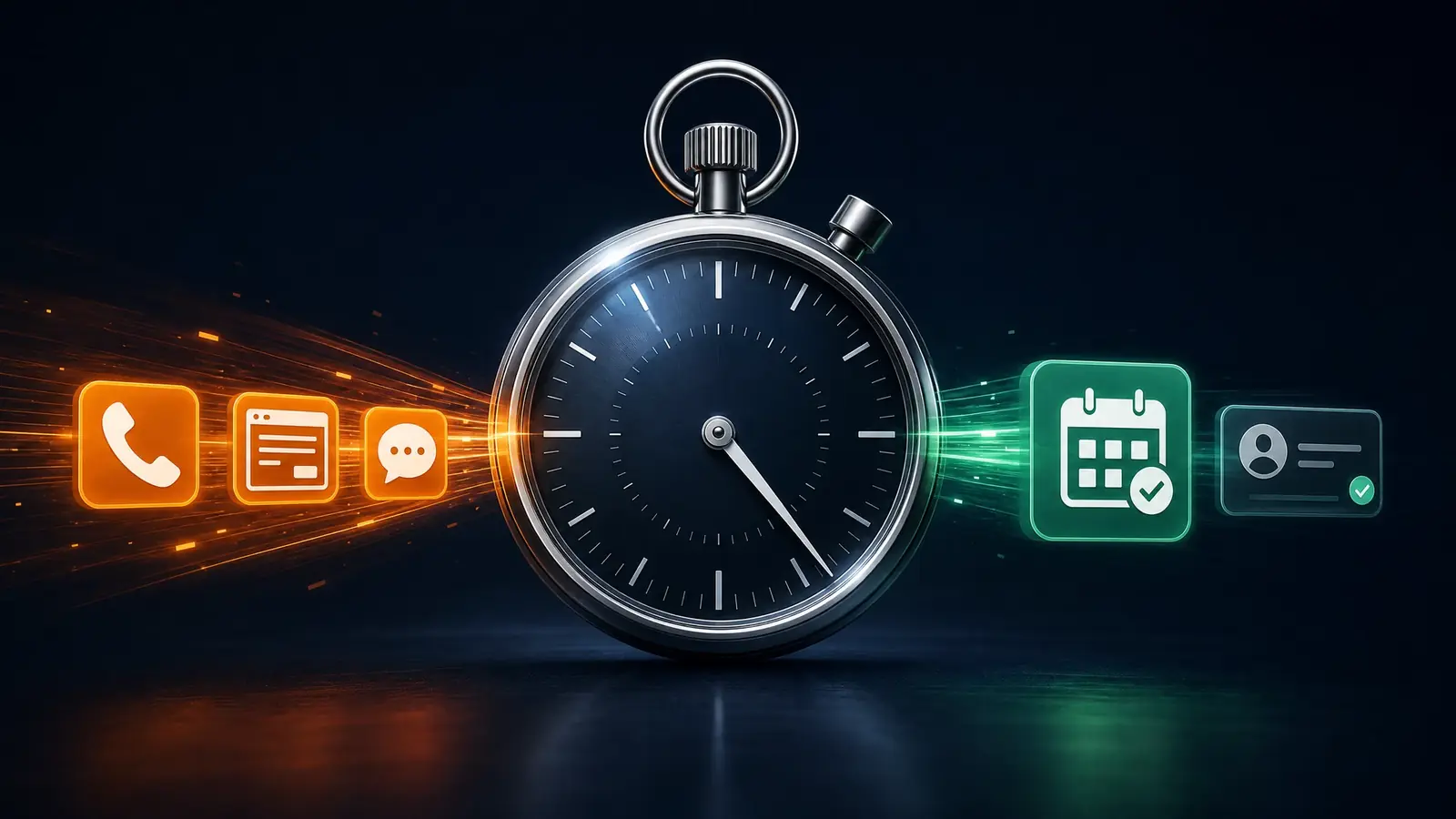
You spent money getting someone's attention. Maybe they found you through Google, clicked an ad, saw a social media post, got a referral, or landed on your website. Then they did exactly what you wanted them to do. They raised their hand and said they were interested. They called your business, filled out a form, sent a text, started a chat, or requested an estimate.
What happens next? For a surprising number of service businesses, the honest answer is: it depends. It depends on whether someone answers the phone, sees the notification in time, has a quiet moment that day, or remembers to follow up before the trail goes cold. That gap between a lead raising their hand and a business responding is where revenue quietly slips away every day.
Generating a lead does not generate revenue. Converting that lead does, and the first five minutes often decide which business gets the opportunity.
Getting the Lead Is Only Half the Job
Small businesses invest a tremendous amount of time and money in lead generation. SEO, Google Ads, social media, referral programs, email marketing, and lead-generation services can all bring new opportunities through the door. But none of that spending matters if the operational process after the inquiry is weak.
Think about the last time you needed a plumber, electrician, attorney, dentist, or contractor. Did you contact one company and patiently wait all day for a callback? Probably not. Most consumers keep moving. They call the next business, submit another form, or send another message to whoever answers first. The company that responds quickly and makes the next step easy holds a meaningful advantage over everyone else in the search results.
What is your actual lead response time during business hours, after hours, and when your team is busy? If the answer changes by the day or person, your lead-management system is not consistent yet.
Follow One Lead Through Your Business
Say it's 2:17 in the afternoon. A potential customer finds your company online and calls. Your receptionist is already on the phone with someone else, so the call goes unanswered. What happens now? Does anyone receive an immediate notification? Does the customer get a text letting them know someone will be with them shortly? Does a follow-up happen automatically, or does it depend entirely on somebody noticing the missed call later that day?
Does the lead even make it into your CRM? If nobody reaches them on the first try, does the system keep working the lead or does it stop? Now picture that same missed call at 7:30 in the evening, on a Saturday afternoon, or during a stretch when the entire team is slammed. The lead does not know why nobody answered. They simply know they need help, and they will find a business that can give it to them.
The Problem Is Not Always Your Employees
This is where business owners often land on the wrong diagnosis. The instinct is to think the staff needs to follow up better, and sometimes that is true. More often, employees are being asked to manually manage a process that should never have depended entirely on human memory in the first place.
Your team is already answering phones, responding to emails, taking care of existing customers, preparing estimates, managing appointments, and solving problems throughout the day. On top of all that, they are expected to remember every lead, multiple times, without anything falling through the cracks. Eventually something gets missed. That is not really an employee problem. It is a systems problem, and reminding people to do better does not fix a process that cannot hold up under real-world busyness.
A reliable lead response process should not depend on who happened to be free, who saw the notification first, or who remembered the task later.
What Should Happen in the First Five Minutes
A properly built revenue-capture system does not leave the next step to chance. It creates a fast, visible, and repeatable path for every new lead, regardless of the channel they use or the time they reach out.
SAMPLE LEAD-RESPONSE TIMELINE
From “I'm interested” to a protected next step
Lead raises their hand
A caller rings, a website form is sent, a text arrives, or a visitor starts a chat.
The business responds
A live team member or AI assistant acknowledges the inquiry and begins the conversation.
The lead is qualified
The system captures the right details, identifies intent, and determines the appropriate next step.
The next action is confirmed
An appointment is booked, the lead is routed, or a clear follow-up commitment is made.
The record and follow-up are protected
The CRM is updated, the right person is notified, and a follow-up sequence is ready if needed.
If a person is available, great: they get a live human on the line. If not, an AI voice assistant can answer the call, hold a natural conversation, gather approved information, qualify the lead, and even schedule an appointment. If the customer fills out a form instead, the system responds immediately rather than letting the inquiry sit in an inbox. And if the first follow-up attempt does not get a response, the process does not simply stop.
Automated follow-up can continue through text, phone, or email based on the sequence designed for the business. Each interaction is logged in the CRM. When a lead needs human judgment or personal attention, the right team member is notified. If something stalls, the system flags it before it disappears. The business is no longer relying on someone to remember every single step because the process itself is doing the remembering.
When a lead does not answer the first follow-up, what happens next in your business? A real lead-management system should have a defined answer, not a hope that someone tries again.
AI Is Not the Whole System. It Is One Piece of It.
This distinction matters. An AI assistant on its own is not a business operating system, and neither is a CRM, chatbot, or automated text message by itself. The real power comes from connecting all of those pieces into one coordinated lead-management system.
AI can handle conversations, interpret information, qualify leads, and make decisions within clearly defined boundaries. Traditional automation moves information, updates records, triggers notifications, schedules follow-ups, and executes predictable actions. Your CRM organizes the full customer journey in one place. Your employees step in exactly when their expertise and personal attention matter. When those pieces work together, you are not adding another AI tool. You are building infrastructure that protects revenue.
AI voice and chat handle immediate conversations
Automation triggers repeatable next steps
CRM records the complete lead journey
Your team receives alerts when human action is needed
Stop Paying for Leads You Are Not Prepared to Handle
Before spending another dollar to generate more leads, take a hard look at what happens to the leads you already receive. How quickly does your business respond? What happens when nobody picks up the phone? What happens after hours or on weekends? How many times does your team follow up before giving up? What happens when a lead never responds at all?
Can you tell when a lead is stuck in the process right now, or would it simply disappear without anyone noticing? Most importantly, can you actually see the process happening in your business, or are you assuming it works the way you think it does? Sitting with those questions honestly will tell you more about a revenue problem than another marketing report ever could.
Sending more leads into a broken process does not solve a revenue problem. It creates more lost opportunities, faster.
Build the Infrastructure Before You Turn Up the Marketing
Before increasing your marketing budget, make sure your business has the infrastructure to capture the demand you are already generating. At Bizipro, we design AI-powered front-office systems that connect AI voice assistants, chat AI, CRM automation, follow-up sequences, scheduling, escalation, and your human team into one coordinated process.
The goal was never to remove people from your business. It is to stop requiring your people to manually hold every part of that business together by memory alone. The next time someone finds your business and says they are interested, the question should not be whether someone happened to remember to follow up. Your business should already know exactly what happens next.
PROTECT YOUR FIRST FIVE MINUTES